TreeStation provides ecological survey and invasive weed treatment services for developers, landowners, and public bodies across Greater Manchester and the North West. Whether you need a Phase 1 habitat survey for a planning application or a Japanese knotweed management plan for a property sale, we handle the survey work and the practical treatment with our own qualified staff.
Ecological Surveys
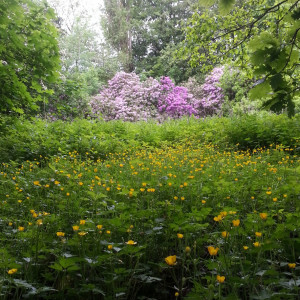
Planning authorities and environmental regulations often require ecological assessment before development can proceed. We carry out the following survey types:
- Walk-through survey -- an initial assessment to identify constraints and determine what further surveys are needed
- National Vegetation Classification (NVC) survey -- detailed botanical survey classifying plant communities against standard reference
- Phase 1 habitat survey -- mapping habitat types across a site to the Joint Nature Conservation Committee standard
- Phase 2 habitat survey (DAFOR) -- detailed species-level assessment using the DAFOR abundance scale
- Ecological Impact Assessment (EcIA) -- evaluating the significance of ecological effects from a proposed development
- Environmental Impact Assessment (EIA) -- contributing ecological chapters to wider environmental assessments
Protected Species Surveys
If a site may support protected species, survey work must be completed before any clearance or construction begins. We carry out visual assessments and, where necessary, detailed surveys for:
- Bats -- roost assessments, emergence surveys, activity surveys
- Great crested newts -- habitat suitability assessments, population surveys
- Badgers -- sett surveys and activity assessments
- Nesting birds -- breeding bird surveys and timing advice for vegetation clearance
- Notable flora -- surveys for protected and notable plant species
Invasive Weed Control
Invasive non-native species cause serious problems for development sites, neighbouring properties, and native habitats. We treat the following species using herbicide application, excavation, or a combination of methods as appropriate:
Japanese Knotweed
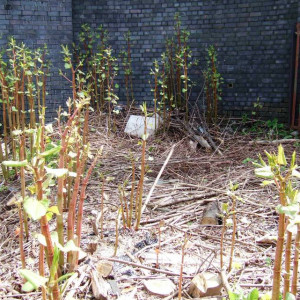
The most common reason clients contact us. Japanese knotweed can devalue property, delay mortgage approvals, and spread into neighbouring land if left untreated. We provide survey, identification, management plans compliant with the Environment Agency's code of practice, and multi-year treatment programmes. We can also provide knotweed reports for property transactions.
Himalayan Balsam
Spreads rapidly along watercourses and outcompetes native vegetation. We control it through a combination of pulling (before seed set) and targeted herbicide application.
Giant Hogweed
A serious health hazard -- contact with sap causes severe burns. We carry out safe removal using appropriate PPE and herbicide treatment, with follow-up visits to prevent regrowth.
Common Ragwort
Toxic to horses and livestock. We remove ragwort from grazing land and equestrian sites in compliance with the Ragwort Control Act 2003.
Rhododendron
Particularly problematic in woodland settings where it suppresses native ground flora. We clear rhododendron mechanically and treat stumps to prevent regrowth.
Our Approach
- All herbicide work is carried out by NPTC-qualified operatives
- We handle all species in accordance with current legislation, including the Wildlife and Countryside Act 1981 and the Environmental Protection Act 1990
- Initial site visits and no-obligation quotations are free
- Survey and treatment are provided by the same organisation, so there is no gap between identifying a problem and dealing with it